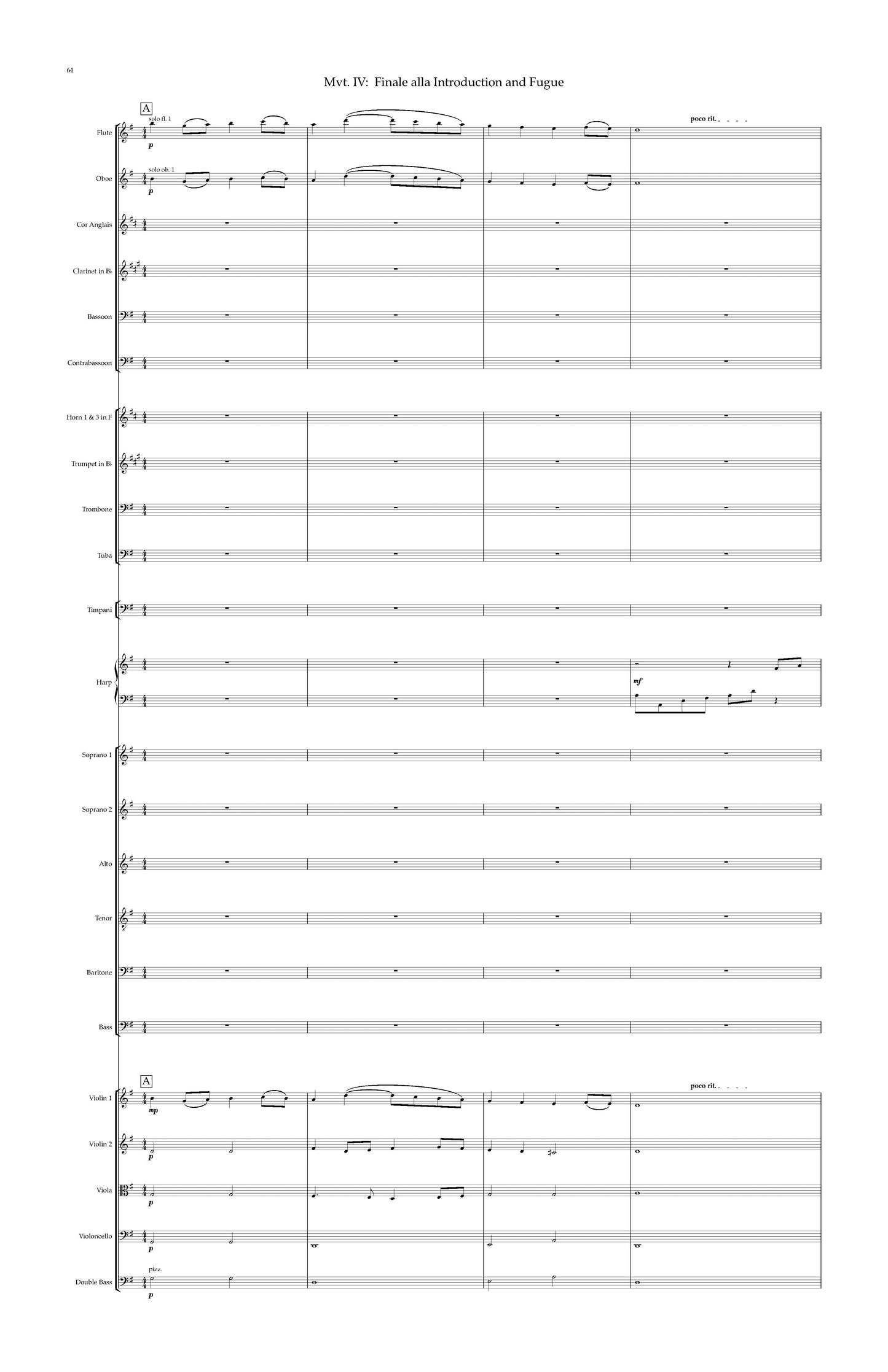
Symphony No. 4: "Juneteenth"
Symphony No. 4: "Juneteenth"
Mixed Chorus and Orchestra 3(3=picc)3(3=EH)3(3=bcl)3(3=cbsn) - 4241 - timp, 2 perc, hp - SATBB - strings
Though the Emancipation Proclamation was issued by President Abraham Lincoln on September 22, 1862, and became effective January 1, 1863, it was not until June 19, 1865—two and a half years later— that the people of Texas, including 250,000 enslaved people, were informed that slavery had been abolished. This day became known as Juneteenth and is celebrated not only in Texas, but also in some form from Washington State to New York, and from Illinois to Texas.
The composer, Earl Louis Stewart, on traveling from Louisiana to Texas during his college years, became aware of the (now) federal holiday, which was first recognized in Texas in 1980. Stewart also participated in activities surrounding Juneteenth celebrations as a Fulbright fellow in Ghana, and through these experiences over the years, the idea for his Symphony No. 4: Juneteenth (Identity 34:1) was born.
This work for chorus and orchestra was written to commemorate the early 19th-century Juneteenth celebrations and is musically designed to reflect the format of those celebrations. To this extent, the work may be deemed programmatic. The composition utilizes two prominent forms of African American music in the last half of the 19th century: ragtime and spirituals.
Movements: I: Allegro alla Rag II: Adagio alla Spiritual III: Sankofa IV: Finale alla Introduction and Fugue
Authored (or revised): 1992
Published: 2024
Text source: Trad.
Duration (minutes): 48
Book format: Full score, choral score, parts
SKU
ACA-STEA-013sCouldn't load pickup availability
Instrumental parts for this work are available on rental.
Submit an inquiry for rental costs.